
T-Priority for public safety and critical infrastructure2xTarget downlink performance baseline versus prior first responder treatment on T-Mobile materials. 40%More 5G capacity for first responders than competing providers in the provided sales materials. 98%Nationwide 5G coverage reach across more than two million square miles.
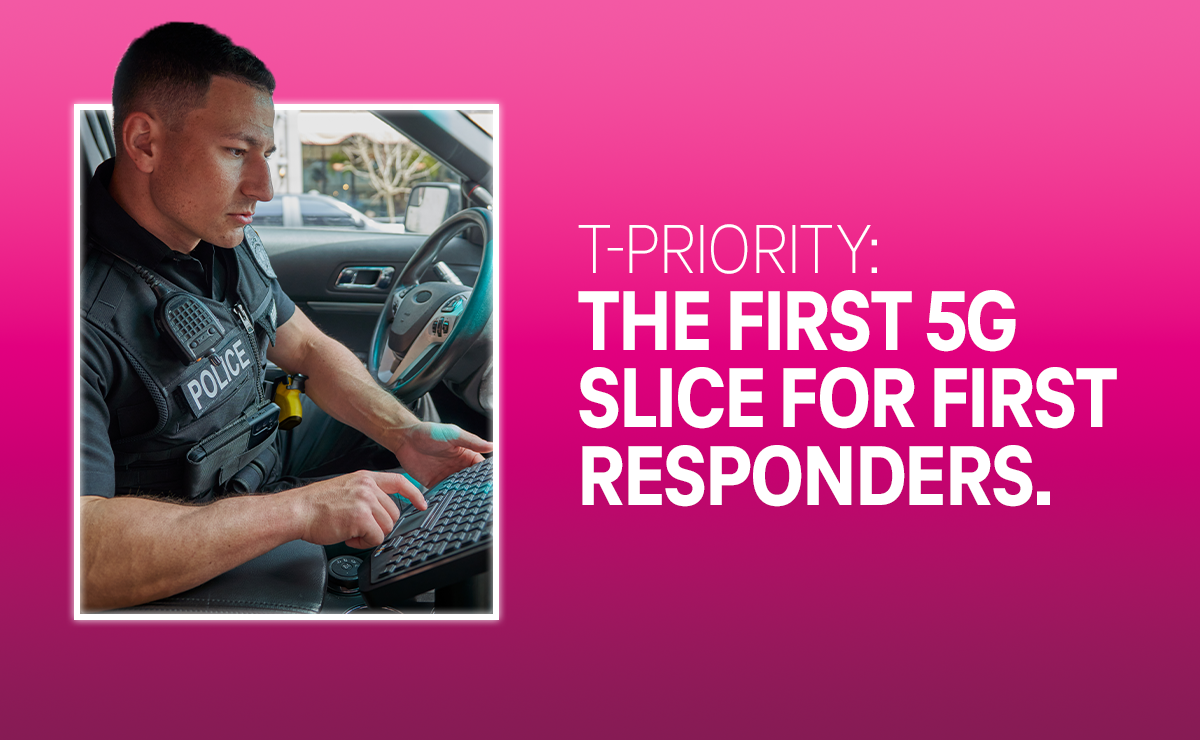
The first 5G slice for first responders, built for mission-critical communications.
T-Priority gives qualifying organizations a stronger path for mission-critical data and communications during congestion, emergencies, and other high-pressure operating conditions. Apostic helps agencies evaluate fit, map the deployment, and activate the service through T-Mobile for Business.
Capabilities, eligible organizations, device requirements, and response-area coverage vary. Apostic can help confirm whether T-Priority, priority access and preemption, and related government options fit the deployment.
Why teams look at T-Priority
Built for agencies that cannot afford to get stuck behind network congestion.
First responders and critical infrastructure teams are relying on more than voice calls. Scene video, patient information, situational awareness tools, mobile command workflows, and mission-critical push-to-talk all increase the need for stronger data performance in the field.
The world's first 5G slice dedicated to first responders.
T-Priority is built around dedicated network resources for qualifying first responder traffic, not just a request to connect faster when a network gets crowded.
Stronger continuity for voice and data when the operating environment gets noisy.
Priority access and preemption help qualifying lines get to the front of the queue. The slice then helps maintain better performance for the applications teams are actively using.

Designed for agencies that need reach, resilience, and room for data-heavy tools.
The provided campaign materials position T-Priority around broader 5G coverage, more network capacity, and better support for emerging response technologies.
How it works
Think of priority access as the faster on-ramp, and the slice as the dedicated lane after you merge.
Standard priority tools can help a responder get onto the network first. T-Priority goes further by carving out dedicated 5G resources for first responders, helping maintain a stronger target performance baseline in rare times of extreme congestion.
- Supports data-heavy workflows such as live video, scene updates, drone-related operations, and remote command tools
- Gives agencies a stronger path for mission-critical communications than voice-only prioritization
- Pairs with priority access and preemption so qualifying voice and data traffic can keep moving
Moves qualified users to the front of the line when access is contested.
This is the part that helps users connect sooner during periods of congestion or emergency conditions. It is essential, but it is still only part of the picture.
Keeps more network resources available for first responder data after connection.
The slice expands to help preserve performance for prioritized users when demand spikes, which is why T-Priority is framed around both access and sustained data treatment.
Built for the tools agencies are already adopting.
That includes patient data transfer, field mapping, command-and-control workflows, mobile situational awareness, and mission-critical push-to-talk that can augment existing radio systems.
Who it serves
Designed for first responders first, with fit for critical infrastructure organizations too.
The materials provided for this build consistently position T-Priority around public safety agencies and qualifying critical infrastructure teams that need dependable data treatment during day-to-day operations and emergency response alike.
Stronger mobile performance for officers, vehicles, and command staff in the field.
Useful when patrol, investigations, multi-agency coordination, and evidence-related workflows depend on stable cellular performance instead of best-effort service.
Built for high-pressure response environments where speed and continuity matter.
T-Priority aligns well with incident response, en route coordination, ambulance-to-hospital information flow, and live scene communications.
Useful where coordination depends on timely updates from personnel, vehicles, and devices.
It fits workflows that benefit from rapid data exchange, stronger situational awareness, and dependable communications during localized surges in demand.
Relevant for healthcare, utilities, transportation, and other qualifying operations.
These organizations often need secure, reliable, and fast connectivity for essential services that cannot pause when networks get busy.
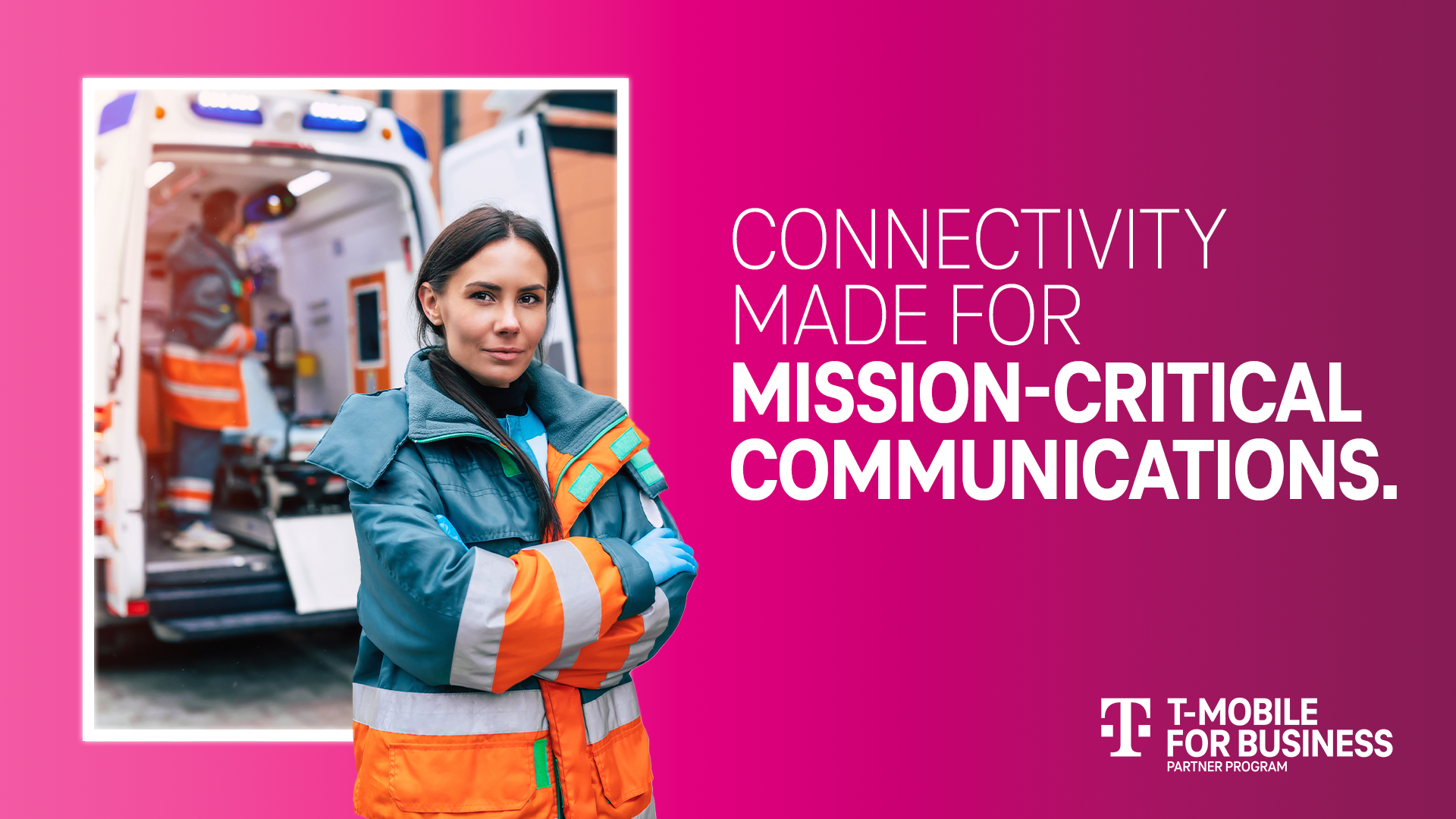
T-Priority sits inside a broader T-Mobile for Business government conversation.
Many public-sector deployments evaluate T-Priority alongside 5G Internet for Government, branch or vehicle connectivity, and the broader T-Mobile business portfolio. Apostic can help sort which combination belongs in the project instead of treating each line item separately.
- Use T-Priority when responder data performance and network treatment are the core issue
- Use 5G Internet for Government for agency sites, temporary operations, backup circuits, and field facilities
- Review the overall T-Mobile portfolio when the agency needs phones, data lines, internet, and support together
Best handled as a guided discovery call, not a generic self-serve order.
T-Priority planning typically includes organization type, field use cases, device readiness, expected coverage areas, and any related requirements such as priority access and preemption enrollment, internet connectivity, or mission-critical push-to-talk.
- Bring the agency type, user counts, and expected responder roles
- List the phones, tablets, laptops, hotspots, or in-vehicle devices involved
- Share the main response areas, operating conditions, and known congestion concerns
T-Priority
Book a meeting for T-Priority planning, qualification, and rollout support.
Use this path for first responder, public safety, healthcare, utilities, transportation, and other mission-critical deployments that may need stronger network treatment through T-Mobile for Business.